

Signal
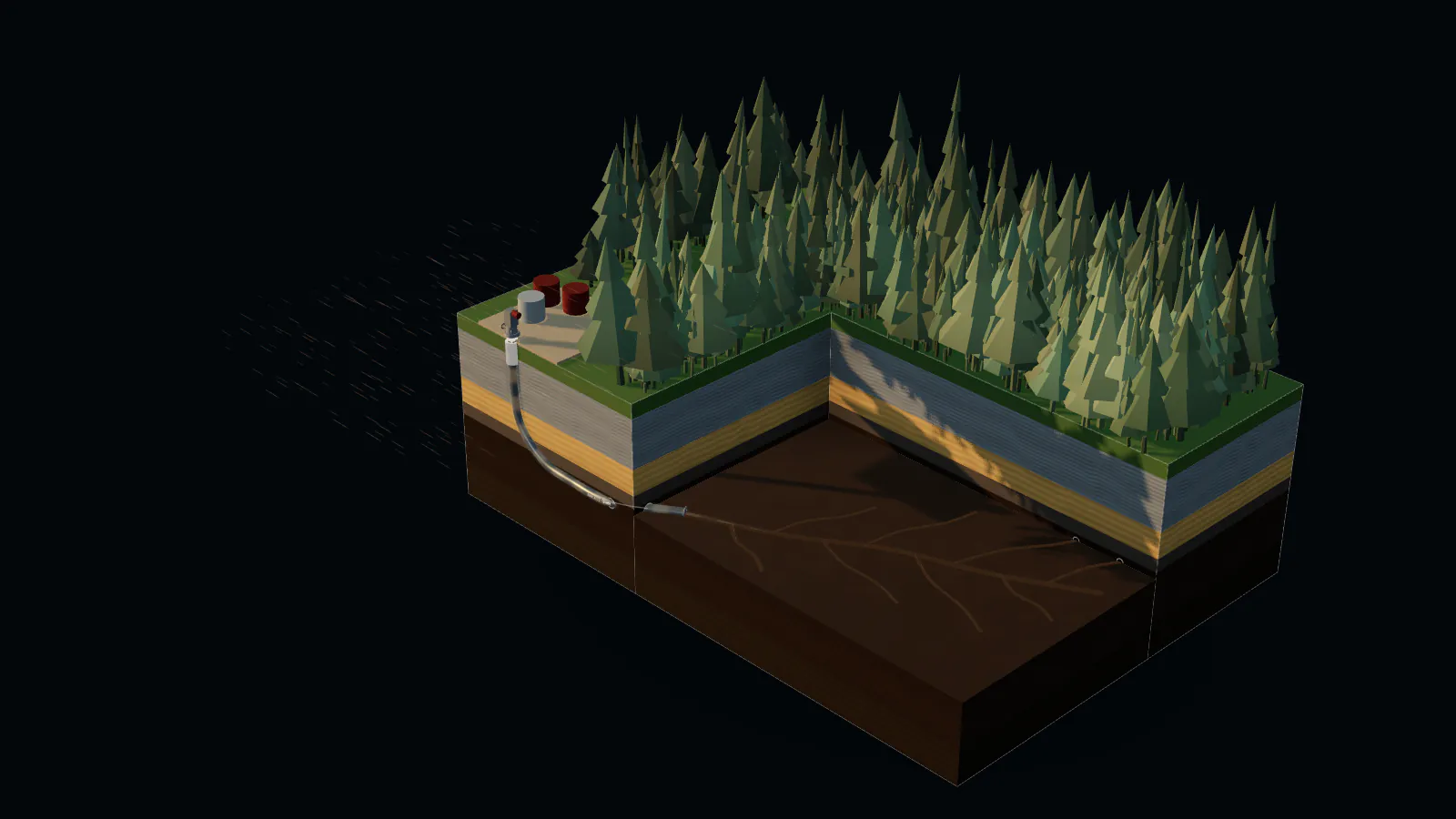
WellFi sends a low-power wireless signal from deep inside the well.
Surface readout: pressure 2600 kilopascals, temperature 26 degrees Celsius, and vibration 4.2 millimetres per second RMS.
WellFi sends a low-power wireless signal from deep inside the well.
Pressure, temperature, vibration, and fluid-condition data are captured.
Live telemetry lands in the control system operators already use.
REAL-TIME WIRELESS DOWNHOLE TELEMETRY
Pressure. Temperature. Vibration. At Surface.
WellFi can be added during a pump change or included in a new well. The tool sends its readings up through the formation itself, and the surface receiver hands them to MODBUS RS-485 or 4-20 mA.
Five channels · one tool
Pump-intake and reservoir response pressure at the lift point.
Representative value: ≈ 2600 kPa (representative values, not a live reading).Temperature trends at the tool depth and operating interval.
Representative value: ≈ 26 °C (representative values, not a live reading).Pump and string vibration changes before abnormal operation escalates.
Representative value: ≈ 4.2 mm/s RMS (representative values, not a live reading).Produced-fluid composition changes from the tool location or paired layouts.
Representative value: ≈ 38 % water cut (representative values, not a live reading).Interval behaviour interpreted from paired pressure and fluid-condition trends.
Representative value: ≈ 0.96 × baseline (representative values, not a live reading).this is where the reading leaves the string
schematic — see the tool figure belowCommission the well
The tool is already in the string. Set the receiver on the pad.
Made up in the tubing string, sitting where you landed it.
The formation carries it up — the rock itself, no cable. Set the receiver where the surface hears it.
Surface hears it and it lands in your RTU — the system you already run.
representative valuesvisual timing not representative
MODBUS RS-485 / 4-20 mA
THE TOOL
WellFi runs on the tubing string — made up into the string, or strapped to the tubing OD inside casing, subject to casing size — on new installs or pump changes. It reports wirelessly, which removes the risk that comes with running a cable.

two legs continue beyond the section
surface looks the same
WHY OPERATORS RUN IT
Know your hydrostatic, understand vibration, avoid pump failure.
Run closer to optimal without flying blind.
Set notifications to ensure your drawdown stays consistent.
See reservoir response at the lift point.
Spot produced-fluid changes as they happen.
Reservoir-fluid monitoring that turns data into production efficiencies.
COMMON QUESTIONS
No. WellFi sends its readings wirelessly through the formation itself to a receiver at surface — no cable to run, clamp or damage.
Pressure at the lift point, temperature at tool depth, pump and string vibration, produced-fluid composition changes, and interval flow behaviour interpreted from paired pressure and fluid-condition trends.
WellFi runs on the tubing string — the collar is made up into the string, or strapped to the tubing OD inside casing, subject to casing size (confirm per well). It is most often run on a new completion or during work that is already scheduled, such as a planned progressing cavity pump changeout or a workover, so no separate intervention is required — but it can also be installed on its own run where a well justifies it.
A surface receiver and ground reference decode the telemetry and output it over MODBUS RS-485 or 4-20 mA to the existing RTU or SCADA system. The WellFi Access Portal also analyzes the data and returns recommendations on drawdown, vibration and produced-fluid trends.
Yotin Energy is an Indigenous-owned energy services company based in Pierceland, Saskatchewan, serving the heavy-oil and oil sands corridor across Western Canada.
Two unseen fields. One visual language.
ABOUT YOTIN Proudly Indigenous Owned
The Cree word for wind — a force that crosses the land without being seen. WellFi works on the same useful truth: what cannot be seen can still be measured.
Yotin is an Indigenous energy services company based in Pierceland, Saskatchewan, serving the heavy-oil and oil sands corridor across Western Canada.
Pierceland, Saskatchewan, Canada
CANDIDATE WELL REVIEW
Well type, changeout timing, and required data establish deployment fit. Check yours in about a minute.
Or reach us directly by email at sales@yotinenergy.com or phone at +1 403-679-5330.
60-second check
Six questions, no contact details required to see the answer — including when the answer is no.
ChatFi
WellFi assistantChatFi is an AI assistant. Conversations may be reviewed to improve the service. Confirm anything that matters directly with Yotin.